Tutorials
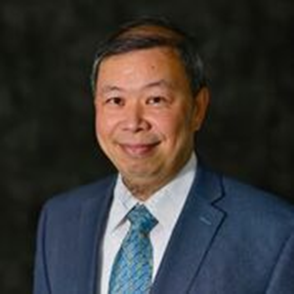
Prof. Kwang-Cheng Chen, University of South Florida and MediaTek Inc.
Title:
Quantum Communications, Cryptography, and Sensing
Day/Date/Hour/Venue:
Sunday/9 November 2025/14:30-16:00/Room A
Abstract:
Quantum technology revolutionizing communications and networking suggests a new technological paradigm of future communications. Quantum mechanics describing microscopic world would be intuitively and fundamentally different from the classic macroscopic world and we must rely on mathematical inductions to comprehend phenomenon and applications. Based on quantum engineering point of view, this tutorial supplies the comprehensive state-of-the-art knowledge in applying quantum mechanics to explore the technology and quantum engineering design of quantum communication systems, quantum cryptography (primarily quantum key distribution), and quantum remote sensing, with breadth and depth. Both quantum-classic communications and quantum-entangled systems will be introduced. For the researchers and practitioners of communication engineering, organized engineering knowledge beyond quantum physics will be systematically introduced, particularly for quantum optical wireless communications and remote sensing, toward a successful integration between the quantum information science and quantum communication engineering.

Prof. Pavlos Lazaridis, University of Huddersfield
Title:
Optimization of 5G/6G antennas using evolutionary algorithms
Day/Date/Hour/Venue:
Sunday/9 November 2025/16:15-17:45/Room A
Abstract:
In this tutorial several evolutionary algorithms are employed for the optimisation of multiband 5G and 6G antennas. Evolutionary algorithms using random search strategies have the advantage of not requiring a very good initial design and avoiding local optima, however their convergence is generally slower than conventional algorithms employing derivatives. The Particle Swarm Optimisation (PSO) and Invasive Weed Optimisation (IWO) algorithms will be presented in some detail. Also, a computational speed analysis will be presented of time domain and frequency domain electromagnetic solvers using CPUs and GPUs.